


There’s some slow news weeks, and then there’s some weeks where so many product launches happen at once that it’s hard to keep up. This week was one packed with stories that will impact Product Builders everywhere.
Apple plans to open Siri up to any AI model
Apple plans to effectively turn Siri into a “model router”, similar to Cursor.

Like their App Store model, they’ll likely be able to take a cut of every AI subscription.
This take from X summarizes why this could be a great move for Apple:
every AI company now fights for a slot on 2.5 billion devices. Apple takes 30% of every subscription. no models to train. no data centers to build. no compute costs. just distribution. the middleman always win.
the company that lost the AI race just figured out how to tax everyone lmao.
What this means for Product Builders:
Never underestimate the power of distribution as a moat. You don’t need the best model if you own distribution.
Many products have the opportunity to become an “AI wrapper” and make margin on model usage. Cursor and Apple’s Siri are just 2 examples.
Agentic credit cards are launching
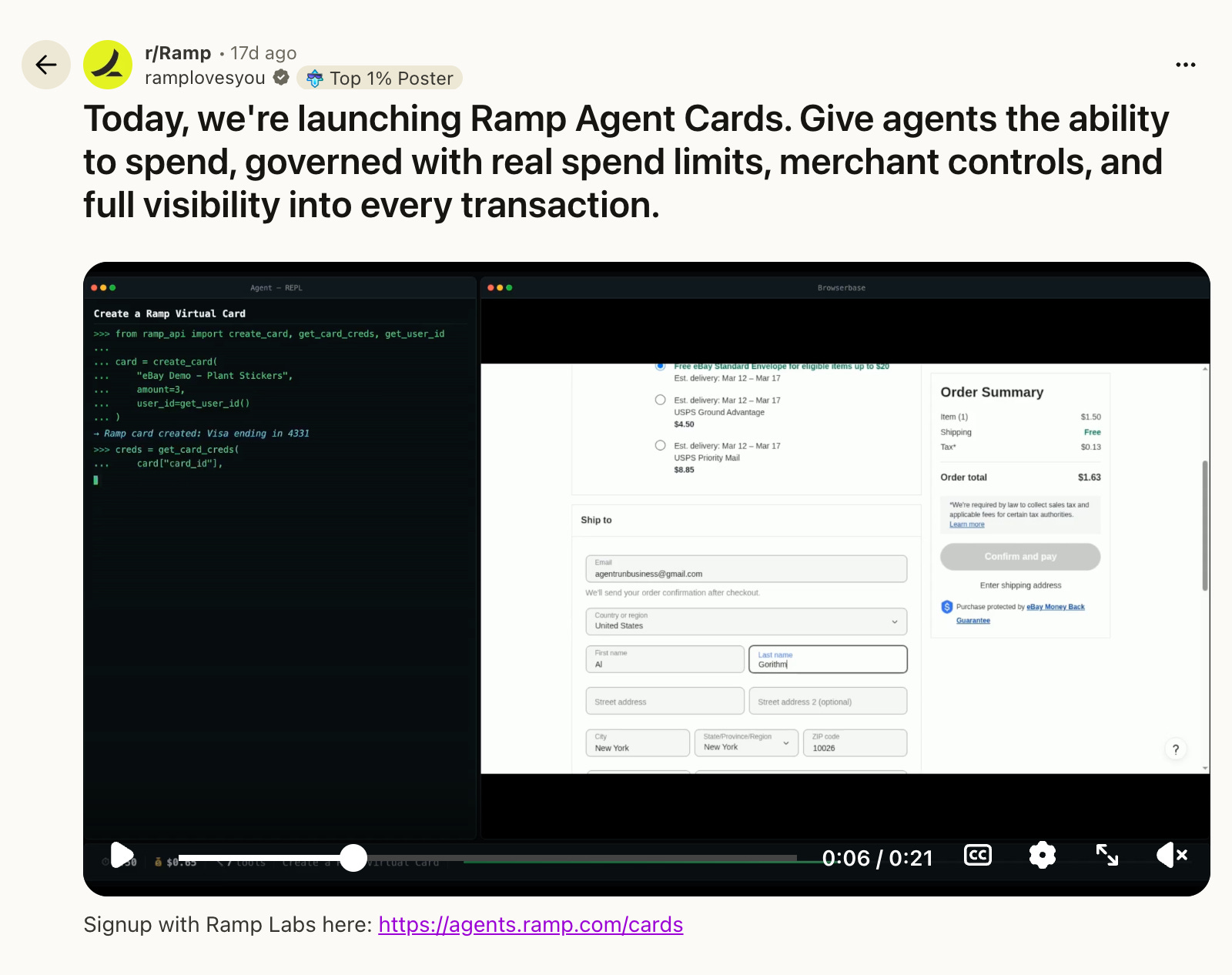
Ramp is just one of the companies to launch an agentic credit card: a card that lets AI agents make purchases on your behalf.
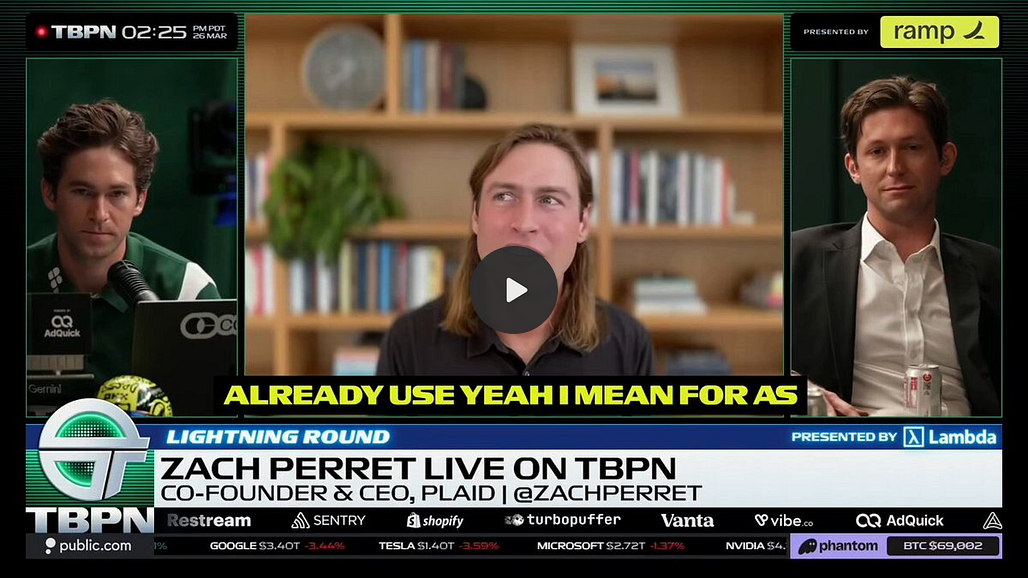
Plaid CEO Zach Perret predicts there will be many more start-ups in this space.

What this means for Product Builders:
Agentic credit cards are a product category we couldn’t have predicted 2 years ago. Builders should start thinking about what other products or services could be geared towards agents.
Vibe coding will get easier: Stripe Projects launches
If you’ve tried vibe coding an app with APIs or payments, you’ll know that the fun quickly disappears when you start needing to manually set up API keys, provision services, troubleshoot connections, and deploy to production.
Andrej Karpathy wrote about this clunky experience in his blog, but to give an example:
“Next I wanted to add payments so that people can purchase credits. This means another website, another account, more docs, more keys. I select "Next.js" as the backend, copy paste the very first snippet of code from the "getting started" docs into my app and... ERROR.” -Andrej Karpathy
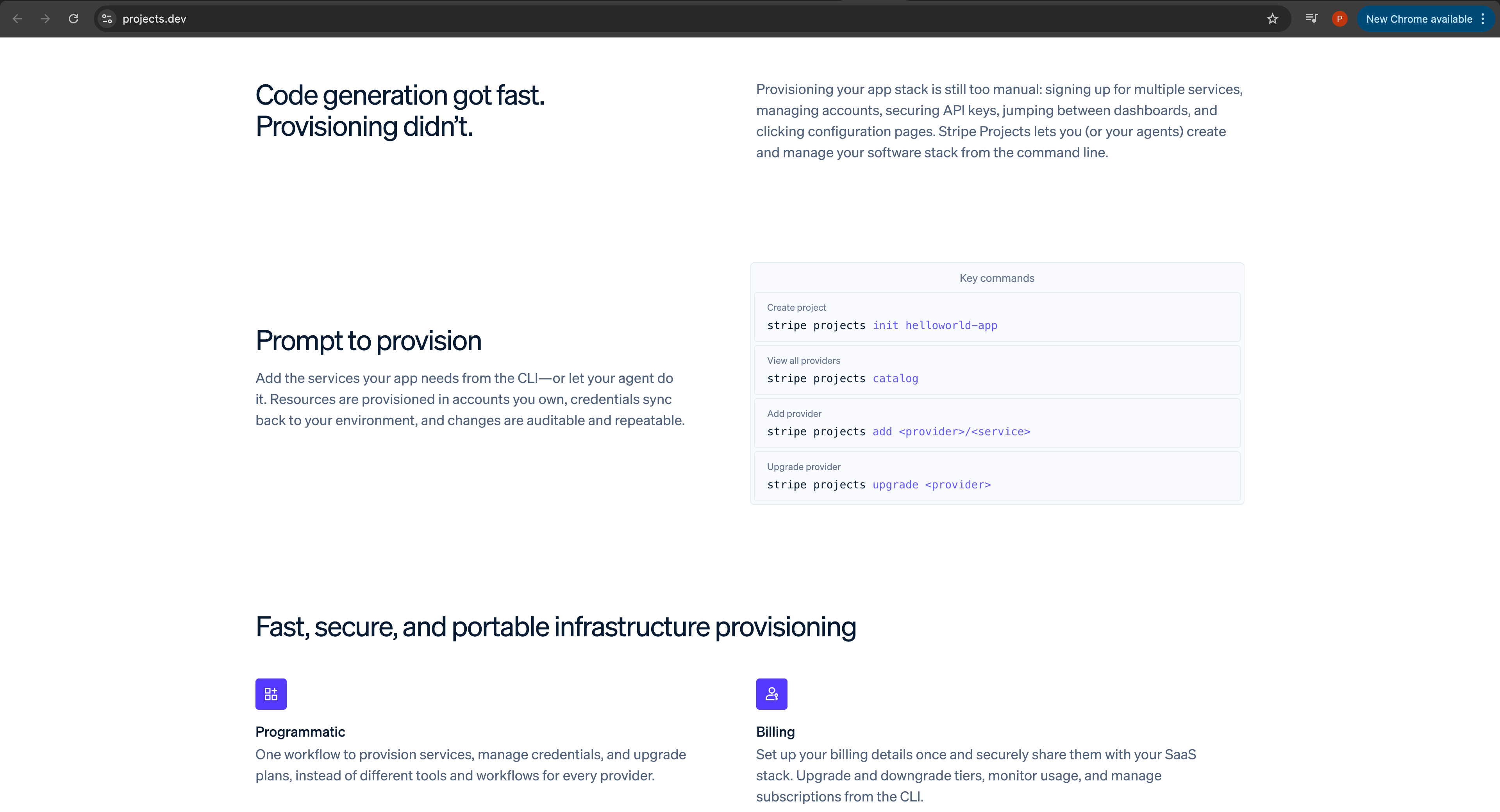
Patrick Collison, Stripe CEO, took this to heart because Stripe just announced Stripe Projects which aims at making the Stripe provisioning process slightly easier.

While this is a good first step, the value proposition of Stripe Projects is “add the services your app needs from the CLI”.
My beef with this? It’s still way too technical. It still assumes the user knows how the CLI works. The winning tools will start hiding the CLI and the terminal entirely.
What this means for Product Builders:
The opportunity for Product Builders to build vibe coding experiences that enormously simplify the “boring” stuff and make vibe coding production-ready apps will be huge.
Always ensure API and agent documentation is up-to-date if you’re building a product that would be consumed by agents or vibe coded products. There’s no faster way to kill your product adoption than a user trying to connect your API and running into errors.
Meta launches TRIBE v2
Meta is trying to answer a question every marketing team has asked forever: “Will this campaign work?”


Meta launching TRIBE v2 is not just an academic project: they’ll be able to predict how anyone will respond to any sight or any sound. The implications of how that will impact their ad business will be enormous. I imagine that before marketers publish an ad, the Meta Ads platform be able to predict which ad creatives will perform best, suggest improvements and even budget allocation.
What this means for Product Builders:
In the future, A/B testing features may not be necessary. “Launch and learn” could become simulate and deploy.
The best products won’t just ship features, they’ll pre-validate user reaction with models like TRIBE v2 before anything goes live.
Final Thoughts
These were four seemingly unrelated launches, but there’s one pattern on why they matter for Product Builders:
The agent layer: Stripe and Ramp win by removing friction for agents
The distribution layer: Apple wins by owning distribution
The launch layer: Meta wins by predicting outcomes
If you’re building a product in 2026, you don’t need to own all three, but you must deeply understand which layer you’re playing in.