


A few weeks ago, Tom Lee went on CNBC announcing a $200 million investment into BeastIndustries, MrBeast’s holding company. This sparked a slew of speculation that MrBeast would be entering FinTech.
This week, that speculation was confirmed.
MrBeast just announced the acquisition of Step, a financial services app built to help young people build credit, invest, and manage money.
With the largest YouTube audience on the planet, spanning millennials to Gen Alpha, he’s built something most fintech startups spend billions trying to earn:
Trust.

His brand is all about giving away money and creating life-changing financial moments, so teaching young people how to manage money responsibly is a natural extension of that narrative.
He’s also reportedly launching a finance-focused YouTube channel, a move that will likely integrate Step directly into his content ecosystem.


The Distribution Hack
As I’ve discussed in past posts, we’re entering a world of near-infinite software.
AI lowers the cost of building → the number of products explodes → customer acquisition costs (CAC) rise across categories.
But MrBeast doesn’t need to buy attention. He owns it.
MrBeast is hacking the distribution equation by buying a FinTech product with 7 million users and plugging it into one of the most powerful distribution engines on Earth.
As Tom Lee points out, every single one of of his Youtube videos are viewed more than the Super Bowl.
MrBeast Earns More from Feastables than YouTube
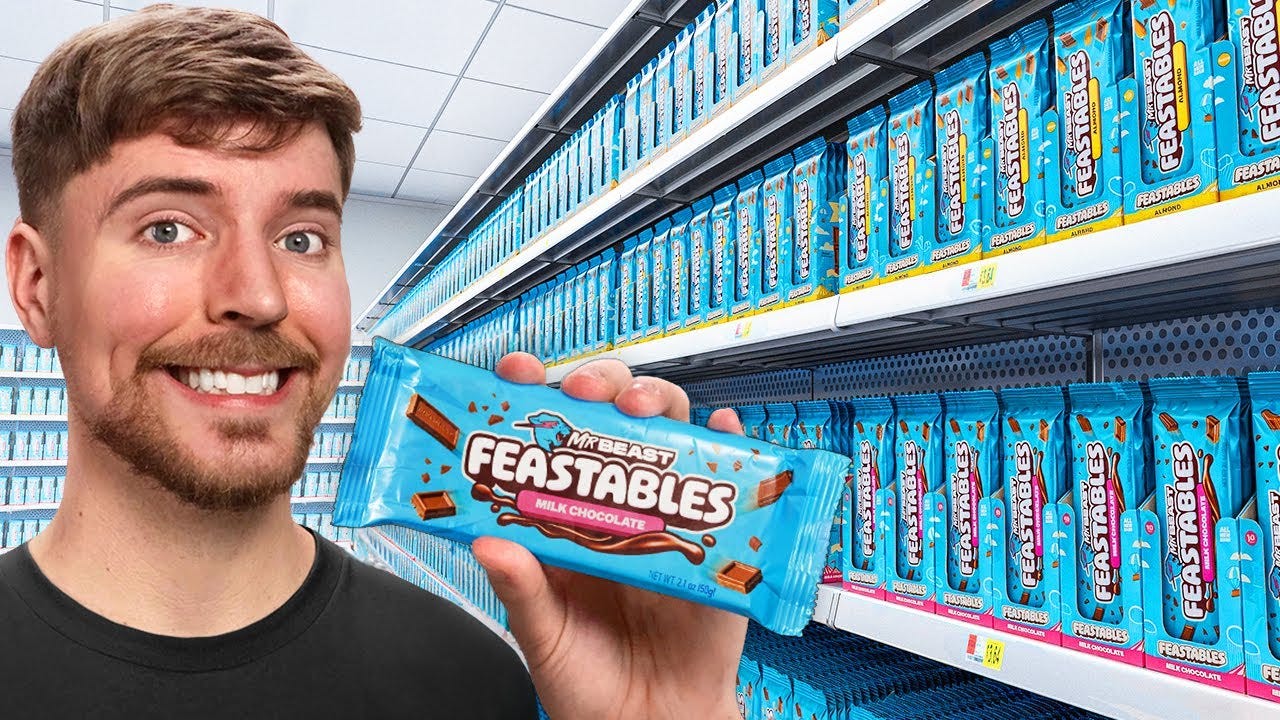
What’s fascinating about MrBeast’s business empire is that he reportedly earns more from selling chocolate through Feastables than from YouTube itself.
Selling chocolate (Feastables), profits: $20 million
Making YouTube videos, profits: -$80 million
MrBeast’s business model proves that content & community is the distribution layer that creates a profitable business, even if you’re just selling chocolate.
And now that he’s redefined product categories like chocolate, and he’ll apply the same playbook to FinTech.
Why FinTech?
In financial services customer lifetime value is everything.
Banks and neobanks know that if you can acquire a customer at a young age, they’ll likely be a customer for life.
If you acquire someone at age 35, you get a few decades of deposits, maybe a mortgage, maybe investments.
If you acquire them at 15? Step could be getting:
💲 Their first debit card
💲 Their first credit history
💲 Their first paycheck
💲 Their first investments
💲💲 Their student loans
💲💲💲 Their first mortgage
💲💲💲 Potentially their children’s accounts
Financial behaviour is sticky. Once direct deposits, autopay, credit lines, and savings accounts are set up, switching becomes friction.
That’s why banks invest heavily in campus programs and student accounts. They know habit formation equals long-term revenue.
MrBeast gives Step something even more powerful: a built-in distribution layer that’s gained trust with Millennials, Gen Z, and Generation Alpha.
What this means for Product Builders
You don’t need to have 460 million subscribers to build like MrBeast.
Every Product Builder in 2026 needs to think about distribution, even at a grassroots level.
This means:
Before/while you build, plan how you’ll get your first 1,000 users
Build in public & post about your journey on social media
Talk to users, test with them, and form a community
That’s why distribution is one of the top skills for 2026.
If you’re looking for more tips on how to build distribution, check out this article next:
Personality-led growth & distribution imperatives for Product Builders.

While watching Love is Blind UK Season 2, a reality TV show on Netflix, I noticed two entrepreneurs had joined the cast.
Now that MrBeast is in fintech it’s about to get more interesting..